One early November morning in 1986 I was sitting down having breakfast at the Beechwood, the hotel that my mother would look after every year for three weeks whilst the owners went on holiday to Australia, when I discovered, via the radio, that the team I supported would be having a new manager.
Following an embarrassing League Cup defeat at Southampton, the previous incumbent, Ron Atkinson, had been sacked and the club were about to embark on the most successful period in its history. Well, I say about to, we had to wait a few years for things to click into place but when they did, boy did they!
I remember the bad times during those early years, particularly the home cup defeat to Nottingham Forest in 1989. Even more painful was the that the league seemed even further away than it had done during Atkinson's tenure. This prompted the infamous message towards the end of 1989 that simply said:

At least Pete Molyneux accepts he was a little premature in unfurling this banner.
The first significant step towards success came at the County Ground, again Forest were the opponents, but this time with a very different result. Thanks to a Mark Robins header from an often forgotten sumptuous Mark Hughes pass (a part of Sparky's game that is frequently overlooked). We were on our way to Wembley. And what a road that was, including some memorable games against Oldham in the semis and Palace in the final.
Then came Rotterdam a year later and Barcelona were overcome in the European Cup Winners' Cup final, largely thanks to the inept goalkeeping of Carles Busquets, standing in for the injured Andoni Zubizararreta. Another slice of luck, admittedly, but Hughes took full advantage to win us our first European trophy since 1968.
Everything was beginning to look good until the culmination of the 1991/92 season. A 2-0 defeat at Liverpool on 26 April 1992 was, and still is, the most painful defeat in all my time as a United fan (http://www.youtube.com/watch?v=EfehJzVT7-w). Why oh why?! We'd blown it. Fergie still remembers the shouts of "fuck you" from the home dressing room and the most galling moment of all for a young Ryan Giggs: outside the ground a Liverpool fan asked for his autograph and then laughed as he tore it up in front of the Welshman's face.
The tears flowed and flowed as I went to bed that night. Once again, the title seemed as far away as ever. It is funny to think that back then I genuinely wasn't sure if I would ever see us win the league.
The next twist was to come once again whilst I was staying at the Beechwood Hotel, in November 1992. When I picked up one of the resident's newspapers to discover the signing of Eric Cantona for a mere £1.2 million.
This was the catalyst.
The first league title was secured following the Frenchman's arrival and then came the next objective. The European Cup. That was the thing with Fergie, once one goal had been achieved, there was always the next one.
A steep learning curve in Europe was to follow but, in 1999, the holy grail was achieved in spectacular style, in 'Fergie time'. "And Solskjaer has won it," screamed Clive Tyldsley incredulously as the Norwegian prodded home to complete a remarkable injury time turnaround.
More domestic success followed but then came the dark years, between 2003 and 2007, when more questions surfaced over whether Fergie was still up to it. He's lost the plot, he's over the hill, the critics claimed.
As a result, winning the title in 2007 was one of the sweetest.
Winning the Champions League in 2008 was monumental and one of the things that sticks in my head the most, as I stood there in the Luzhniki Stadium on that rainy night, is the image of Sir Bobby Charlton leading us up the steps to collect the trophy, 50 years after he survived the Munich air crash, unlike several of his less fortunate teammates. Once again I began to well up.
If there is anything that illustrates the difference between United and the beaten finalists it was seeing Peter Kenyon lead Chelsea up the steps to collect their runners up medals. United chose a legend who embodied the club like no other, Chelsea chose a Chief Executive and supposed lifelong Man United fan. Fake.
No more success on Europe's biggest stage. A couple of finals where we were well beaten by Barcelona and then there was this year's campaign.
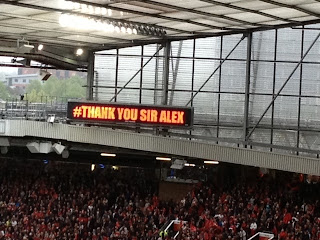
Little did I know back in March when the pain of defeat at the hands of Real Madrid meant I had to go for a long walk, late at night, to try and clear my head. That shock and disappointment pales in comparison to the news of Ferguson's imminent departure. Once again tears were apparent. Especially during his speech at Old Trafford last Sunday, but I wasn't alone in doing this. Emotional.
It was hardly surprising that Ferguson's retirement has provoked such strong emotions. This man, after all, has been responsible for some of the best moments of my life, from the Nou Camp to Moscow, from the Stadio Delle Alpi to Old Trafford. This man has caused me to travel the continent at great expense. But it has been worth it. Every single penny. Thank you Sir Alex.
Following an embarrassing League Cup defeat at Southampton, the previous incumbent, Ron Atkinson, had been sacked and the club were about to embark on the most successful period in its history. Well, I say about to, we had to wait a few years for things to click into place but when they did, boy did they!
I remember the bad times during those early years, particularly the home cup defeat to Nottingham Forest in 1989. Even more painful was the that the league seemed even further away than it had done during Atkinson's tenure. This prompted the infamous message towards the end of 1989 that simply said:

At least Pete Molyneux accepts he was a little premature in unfurling this banner.
The first significant step towards success came at the County Ground, again Forest were the opponents, but this time with a very different result. Thanks to a Mark Robins header from an often forgotten sumptuous Mark Hughes pass (a part of Sparky's game that is frequently overlooked). We were on our way to Wembley. And what a road that was, including some memorable games against Oldham in the semis and Palace in the final.
Then came Rotterdam a year later and Barcelona were overcome in the European Cup Winners' Cup final, largely thanks to the inept goalkeeping of Carles Busquets, standing in for the injured Andoni Zubizararreta. Another slice of luck, admittedly, but Hughes took full advantage to win us our first European trophy since 1968.
Everything was beginning to look good until the culmination of the 1991/92 season. A 2-0 defeat at Liverpool on 26 April 1992 was, and still is, the most painful defeat in all my time as a United fan (http://www.youtube.com/watch?v=EfehJzVT7-w). Why oh why?! We'd blown it. Fergie still remembers the shouts of "fuck you" from the home dressing room and the most galling moment of all for a young Ryan Giggs: outside the ground a Liverpool fan asked for his autograph and then laughed as he tore it up in front of the Welshman's face.
The tears flowed and flowed as I went to bed that night. Once again, the title seemed as far away as ever. It is funny to think that back then I genuinely wasn't sure if I would ever see us win the league.
The next twist was to come once again whilst I was staying at the Beechwood Hotel, in November 1992. When I picked up one of the resident's newspapers to discover the signing of Eric Cantona for a mere £1.2 million.
This was the catalyst.
The first league title was secured following the Frenchman's arrival and then came the next objective. The European Cup. That was the thing with Fergie, once one goal had been achieved, there was always the next one.
A steep learning curve in Europe was to follow but, in 1999, the holy grail was achieved in spectacular style, in 'Fergie time'. "And Solskjaer has won it," screamed Clive Tyldsley incredulously as the Norwegian prodded home to complete a remarkable injury time turnaround.
More domestic success followed but then came the dark years, between 2003 and 2007, when more questions surfaced over whether Fergie was still up to it. He's lost the plot, he's over the hill, the critics claimed.
As a result, winning the title in 2007 was one of the sweetest.
Winning the Champions League in 2008 was monumental and one of the things that sticks in my head the most, as I stood there in the Luzhniki Stadium on that rainy night, is the image of Sir Bobby Charlton leading us up the steps to collect the trophy, 50 years after he survived the Munich air crash, unlike several of his less fortunate teammates. Once again I began to well up.
If there is anything that illustrates the difference between United and the beaten finalists it was seeing Peter Kenyon lead Chelsea up the steps to collect their runners up medals. United chose a legend who embodied the club like no other, Chelsea chose a Chief Executive and supposed lifelong Man United fan. Fake.
No more success on Europe's biggest stage. A couple of finals where we were well beaten by Barcelona and then there was this year's campaign.
Little did I know back in March when the pain of defeat at the hands of Real Madrid meant I had to go for a long walk, late at night, to try and clear my head. That shock and disappointment pales in comparison to the news of Ferguson's imminent departure. Once again tears were apparent. Especially during his speech at Old Trafford last Sunday, but I wasn't alone in doing this. Emotional.
It was hardly surprising that Ferguson's retirement has provoked such strong emotions. This man, after all, has been responsible for some of the best moments of my life, from the Nou Camp to Moscow, from the Stadio Delle Alpi to Old Trafford. This man has caused me to travel the continent at great expense. But it has been worth it. Every single penny. Thank you Sir Alex.


